- Derinkuyu Underground City
Although the exact date of construction is not known, it has been determined by archaeologists that it belongs to the Hittites (2000 BC). It is known that the first floors were used during the Hittites period, but the main part was built by the Christians who escaped from the Roman invasion towards the end of the 3rd century AD. Underground cities used for shelter were built in such a way as to enable them to survive for a short time. There are cafeterias, ventilation shafts, supply warehouses, wineries, sitting areas, sliding doors, communication tunnels, stables, churches and a missionary school unique to Derinkuyu city. Derinkuyu Underground City is the deepest among the underground cities that can be visited in the region. Although the deepest point is 55 meters at the moment, it is known that the actual depth goes as deep as 85 meters. There are also around 50 ventilation shafts. Although most of the chimneys have been closed in the historical process, the air chimneys that are still open today provide fresh air circulation in the underground city. The deepest air shaft is the 55 meter deep air shaft, which was also used as a water well.
It is located in the city of Niğde and is the only crater lake in the Cappadocia region. Nar Lake collapsed in the early Quaternary, that is, 2.5 million years ago, as a result of volcanic eruptions in the region, and took the appearance of today's maar. The lake is surrounded by hills. Many thermal facilities have been established around the Nar Lake, which is very rich in calcium, sodium and bicarbonate. Juvenile (never surfaced before, not mixed with any water since its formation) waters, which are generally seen in volcanic areas, emerge from magma pockets along fault lines. For example, water is extracted from the borehole on the shore of the lake at a temperature of 65 degrees. Juvenile waters from these Magma pockets contain more dissolved mineral matter.
It is one of the most beautiful settlements where you can watch the historical continuity in the Cappadocia region. In ancient times, it was called karballa, with the influence of Greek language, as karvali, with the influence of Turkish, it was named as gelveri, and today it has been changed as Güzelyurt. His name is Hz. It is likely that he got it from Golgotha or calvari, the place where Jesus was crucified. Until the population exchange period of 1924, both Christians and Muslim Turkish people lived here in peace. It is possible to see beautiful examples of the stone houses they built on the rock floor of Güzelyurt Evleri, both their durability, their architectural features and their preservation until today, in every street of the town. The most general feature of the houses is that they are adjacent to each other and their roofs are arched, and the construction date of the house, which is still located at the door of most of the houses, gives information about the arch processes on the walls, culture and historical process.
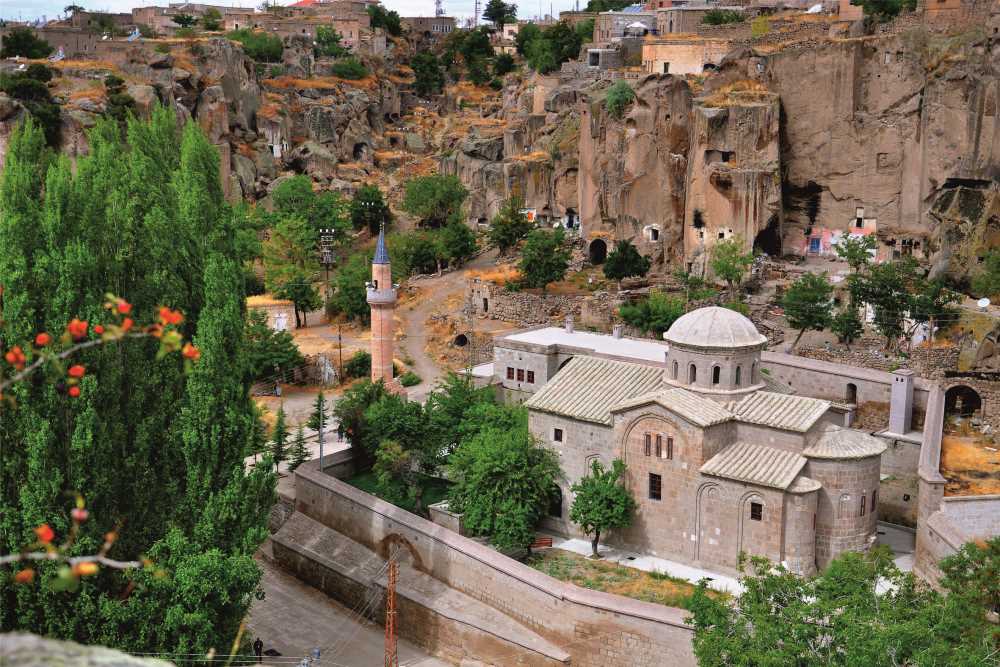
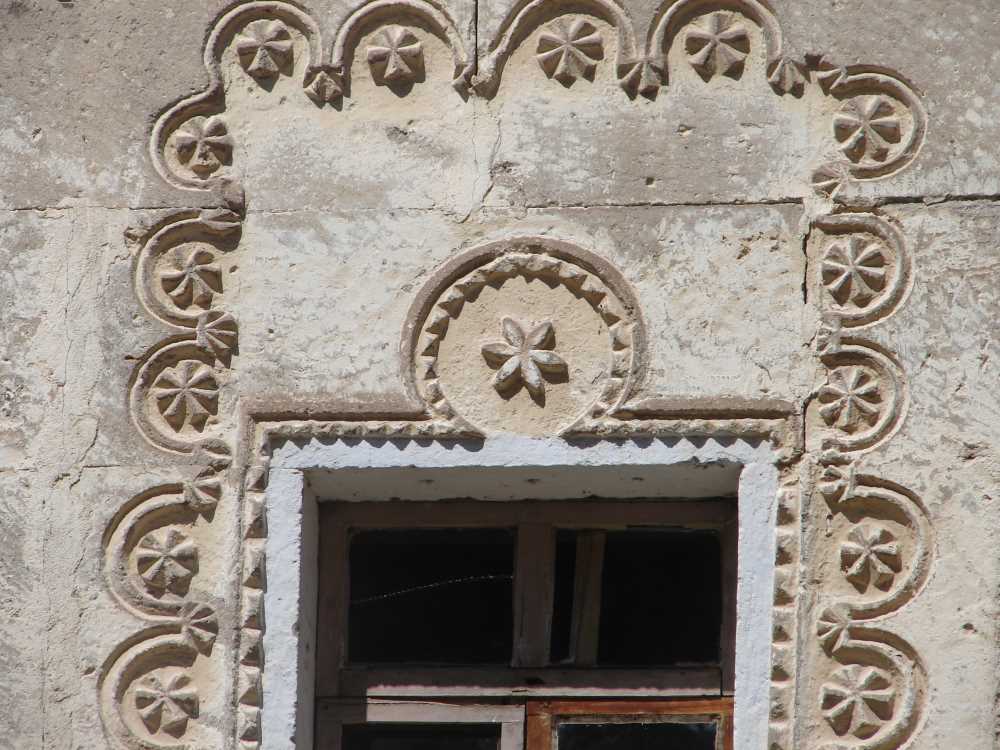
St. Basil, who was very important in the Cappadocia region in the 4th century, and even known as the Cappadocian saints, was the archbishop of Kayseri, his brother St. Gregorios the bishop of Nevşehir and St. Gregorios the bishop of Niğde. This church in Gelveri is dedicated to saint gregorios, one of these three saints who took important steps in monastic life. Although the exact date of construction of this church is not known, it is estimated to be the 6th century. It was restored in 1835 and 1896, and in 1924 it was converted into a mosque. There are some decorations on the front of the church. Some of these include cherubim, seraphim, various animal figures, and two lions.
- Church of St. Anargirios (Sevişli)
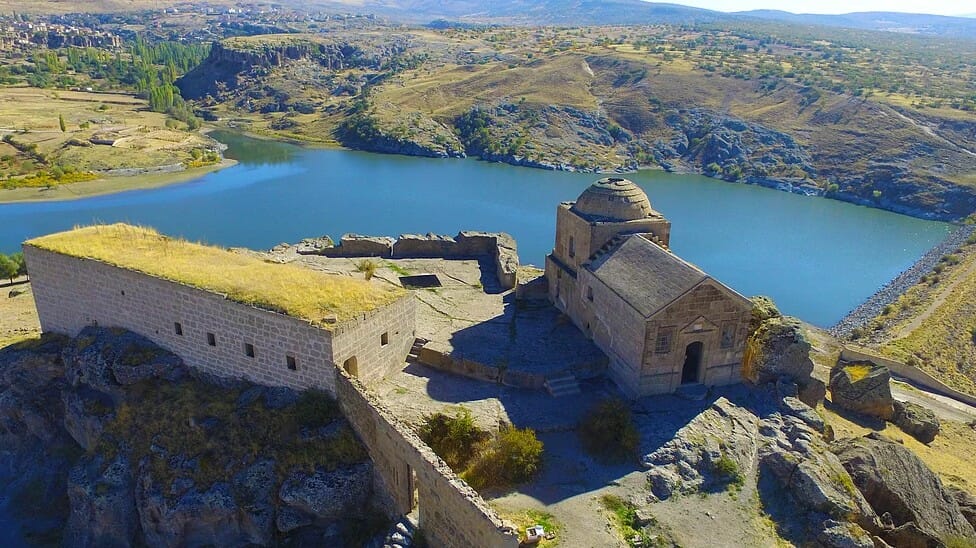
On the hill right across from the Church of St. Gregorios, there is the Church of St. Anargirios (with love). Argirios means silver coin. Anargirios, on the other hand, means the church of physicians who treat patients without asking for money. There are monk cells around the church, rooms that are thought to be reserved for people who came here for treatment, and another part that is thought to be the priest's house. On the dome on the ceiling of the church, there is a picture of Pantokrator and apostles from the 19th century, and there is a scene of deisis in the apse. This hill also offers a very beautiful view where you can watch the town of Güzelyurt from a bird's eye view.
It is one of the oldest churches of the Cappadocia region. Gregorius of Niyssa is also one of the 3 saints known as the fathers of Cappadocia. After returning from Istanbul, he spent the last years of his life living on the farm here until his death. The researches have determined that some of the remains found near the church are suitable for the farm structure. These findings support the accuracy of the church construction and the story. When the church architecture and the frescoes are examined, they give the same dates. The name of the church used today comes from the red stones used in the construction of the church. Especially at sunset times, the redness becomes more pronounced. The church has been one of the stopping points for Christians going on pilgrimage throughout history.
- High Church (Girls Monastery)
In 1895, there is a water cistern under the church with a barrel vaulted dome on a rock floor, and rooms for priests and nuns next to it. Its name comes from the fact that it is located on the summit of the rock structure where it was built. Its location also has a breathtaking view of Güzelyurt and Hasan Mountain.
Not
- Since the daily program flow may change according to some dynamics, there are events and brief information to be seen and experienced throughout the day in details.